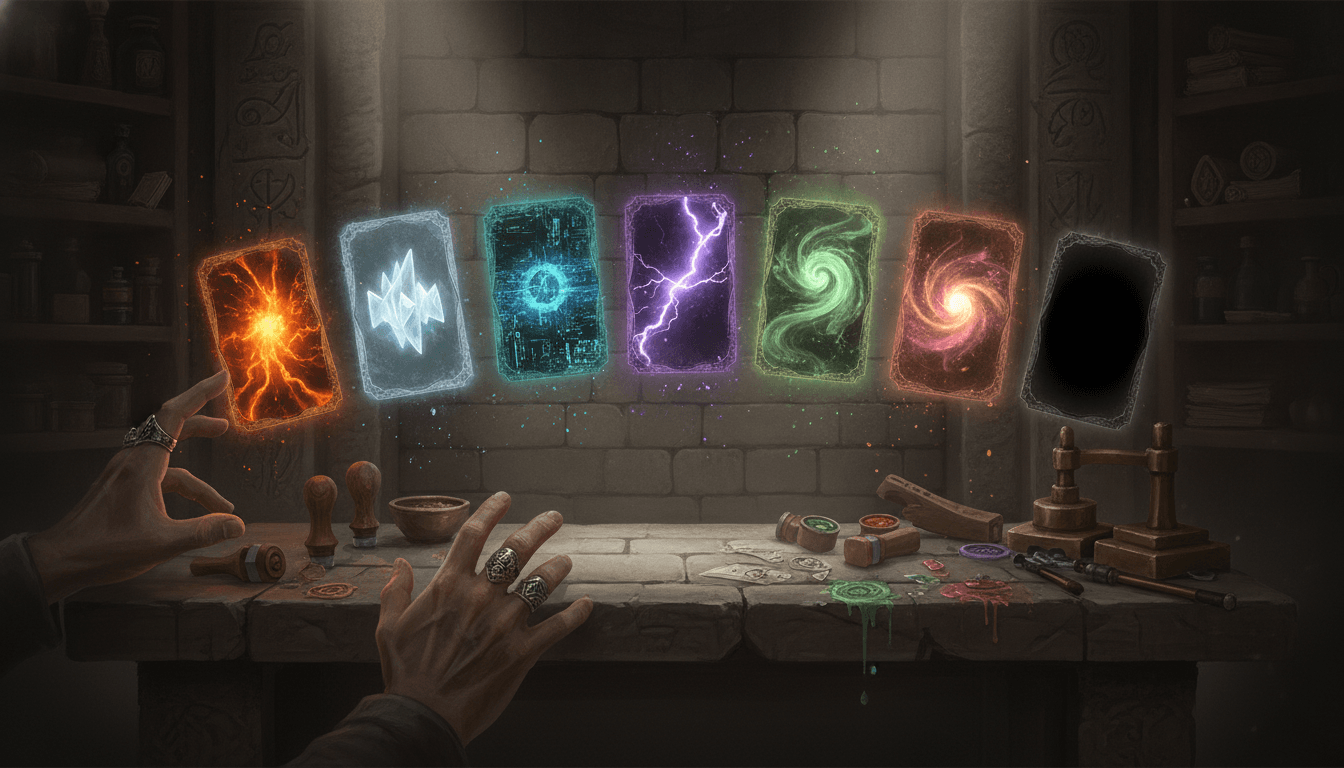
The Birth of the Element Cards
For three hundred years, every card was the same kind of card. Then the world broke seven times — and the survivors began sealing what the breaking had left inside them.
For more than three hundred years, every card in the world was the same kind of card.
That is worth sitting with for a moment. From the first sealed sheet of Syleth paper in 0 KM to the end of the Ancient Card Age, card craft grew, spread, professionalized, and changed almost nothing about itself. A card held seal work: protection, light, healing, a lock undone, a gate held shut. The best masters made stronger seals, cleaner seals, seals that failed more gracefully. No master made a different kind of seal. It did not occur to anyone that a different kind was possible.
The Card Masters Council, founded in 214 KM, standardized the craft precisely because it believed the craft was finished. The seal orders were mapped. The techniques were codified. What remained, the Council taught, was refinement.
Then the world broke.
It broke seven times in a hundred and three years, and each breaking is its own story — the Ember Rift that split Kharuun, the Crystal Scream that turned Elyndra''s song lethal, the Parallel Shard that fell on Virex from a reality that was not this one, the Sky Rift that poured storm through a cracked sky over Auralis, the Soul Valley War whose dead could not leave, the Eclipse Night that hung Salmora between day and dark, and the first Void Exile, the one catastrophe the world handed out itself.
The catastrophes made survivors. And the survivors were wrong.
Not wrong in the way the injured are wrong, though many were injured. Wrong in the way a changed thing is wrong to the pattern that no longer fits it. Fire did not treat the survivors of Kharuun as fuel. The children of Elyndra heard the shapes of rooms. Virex''s people read seal structures the way other people read faces. Something had entered them, or been uncovered in them, and it did not go away when the ash settled.
For years, no one thought of cards. Survival used up the years.
The first person known to close the distance was Kharven Drax.
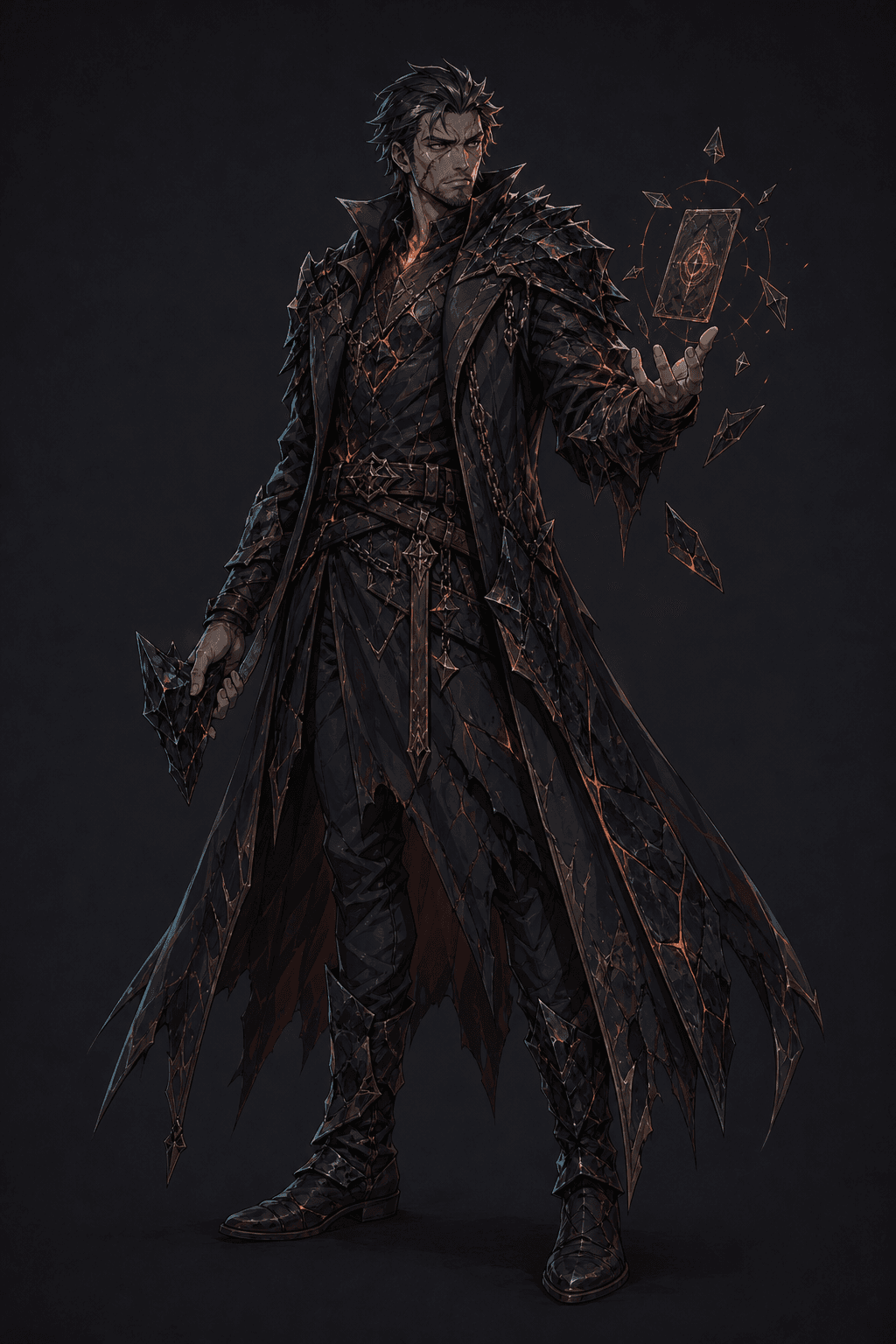
Drax was a grown seal-crafter when the Ember Rift took his town, which mattered: he already had the discipline before the catastrophe gave him the reason. The accounts agree on the essentials and argue about everything else. In the ruins of Kharuun, sometime near 330 KM, Drax attempted to work a seal the old way — and found the seal pulling at something in him, the way a channel pulls at water. The heat he had carried out of the Rift, the pressure he had learned to hold the way his people held anger — it wanted into the pattern.
He let it in.
The first Magma card was, by every account, a bad card. It scorched its Syleth sheet in the sealing, which was supposed to be impossible. It activated unevenly. One version of the story says it burned a hole through a stone bench; another says it merely warmed a cold room for a night, and Drax wept, because a warm room in ruined Kharuun was worth more than a weapon.
But it held. The seal held. The element sat inside the card the way seal power had always sat inside cards, and the world was different.
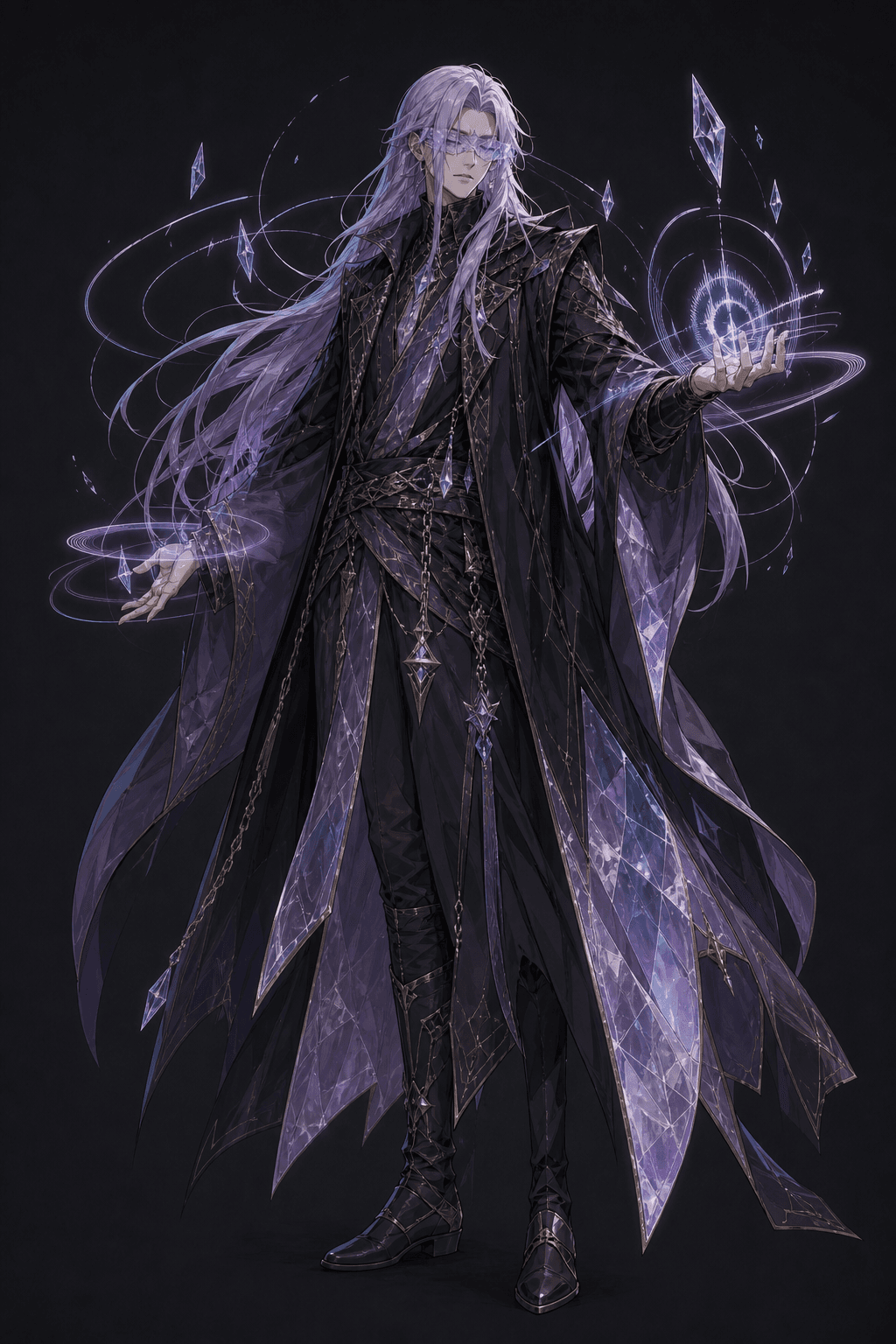
Word of the Kharuun seals traveled the way dangerous ideas travel — denied first, then studied in secret, then claimed by everyone at once. In Elyndra, Seryn Vael, who had learned to hold frequency steady in a landscape that screamed, worked the resonance into cards that sang once and precisely. In Virex, Orix Venn approached the problem the way Cybers approach everything, documenting each failure so thoroughly that later masters called the failure logs more valuable than the successes. Storm work followed in Auralis, where Thalen Rusk''s generation sealed motion itself and changed what distance meant. In Veran, after the peace, the Soulbound sealed remembrance — cards of bond and guidance, made slowly, because their element had been paid for so dearly. Salmora''s Eclipse masters worked at thresholds, and their cards did things at dusk that they would not do at noon.
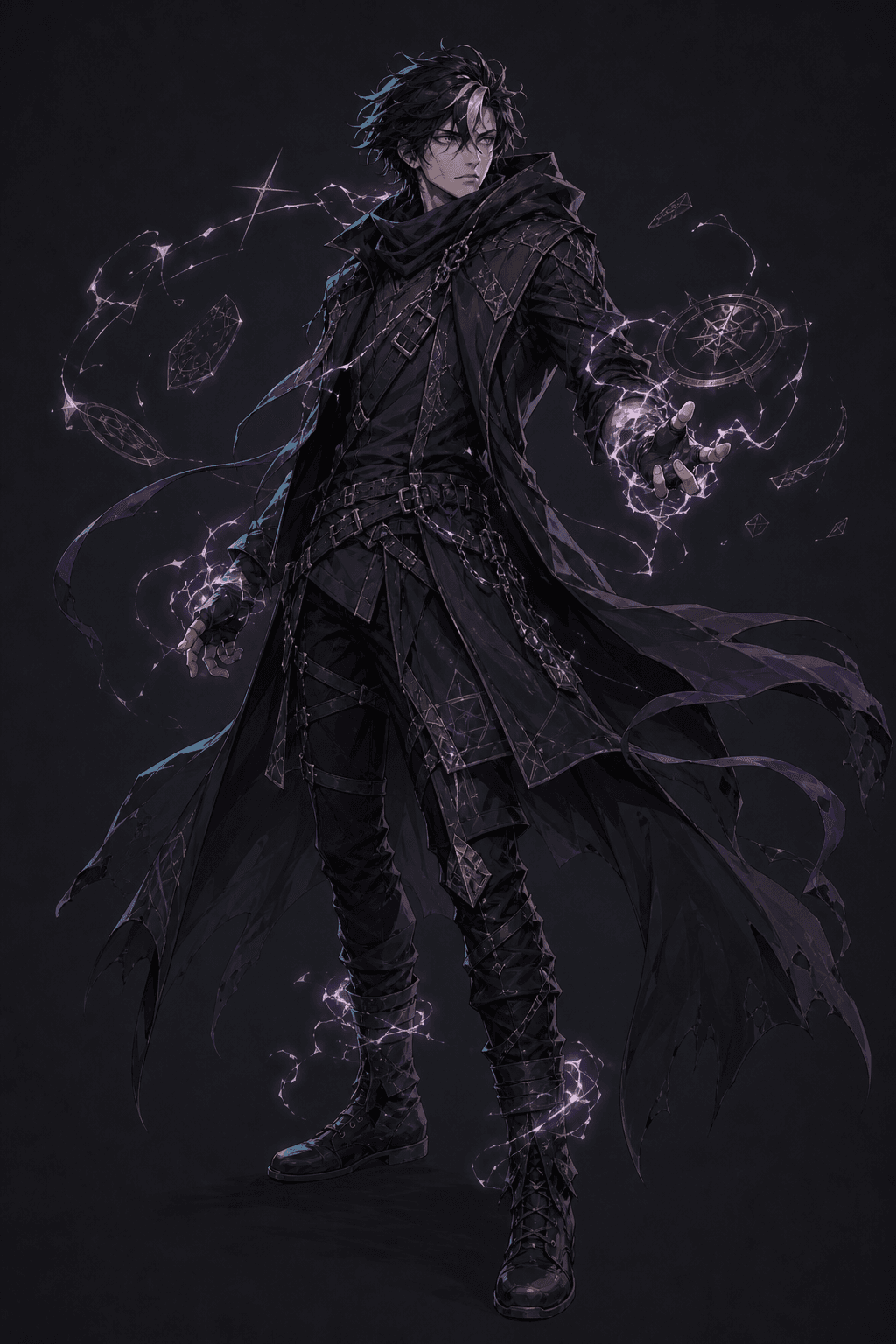
And from the Null Expanse came cards no one admitted to making — seal work touched by absence, unstable, forbidden almost as fast as they existed. The Void had entered the world as a punishment; its cards entered as a rumor, and stayed as a black market.
The Council fought it, at first. The record of those decades is a record of an institution discovering that its map was smaller than the territory. Element seals broke the standards, the standards were rewritten, the rewritten standards broke again. By roughly 450 KM the arguing was over: the element card was not an aberration of the craft. It was the craft, extended into seven new rooms — and the Council''s registry of forbidden work had grown a new chapter that has never stopped growing since.
It is easy, at this distance, to tell the story as triumph. The survivors turned their wounds into tools; humanity domesticated catastrophe; the card, humanity''s oldest answer to unbearable power, absorbed seven new powers and held.
The masters who lived it told it differently. An element card, they warned, is a survivor''s transformation made repeatable — someone''s worst day, sealed, sold, and spent by strangers. The Card Wars, which began before the last element card was born, made the warning specific. Cities burned by seal work taught the world what the Council''s scribes had already written in the margins of the new standards:
Humanity discovered cards first. The elements came after. The order matters — because the cards were made to hold power safely, and the elements have been testing the hold ever since.
Related records
Signals from this file

Inline portals