Draven Oris: The Apocalypse Was Not So Bad After All
Draven Oris was seventeen when the Ember Rift split the world open. He walked out of the fire unburned, holding a cold stone — and a sentence that would price everything.
Type
origin
Character
Element
Region
Origin event
Draven Oris was seventeen when the Ember Rift began.
Afterward, people invented a great deal to explain how he survived that day. They said he was among the first awakened of the Magma Lineage. They said the fire had chosen him. Some told stories of how, even as a child, Draven could look at hot things a little too long, and how that had always been a sign.
Draven corrected none of these stories.
Because after a catastrophe, people want meaning. And if they cannot find meaning, they will settle for a lie that looks like it. Draven learned this early.
The truth was simpler.
That day, the world split.
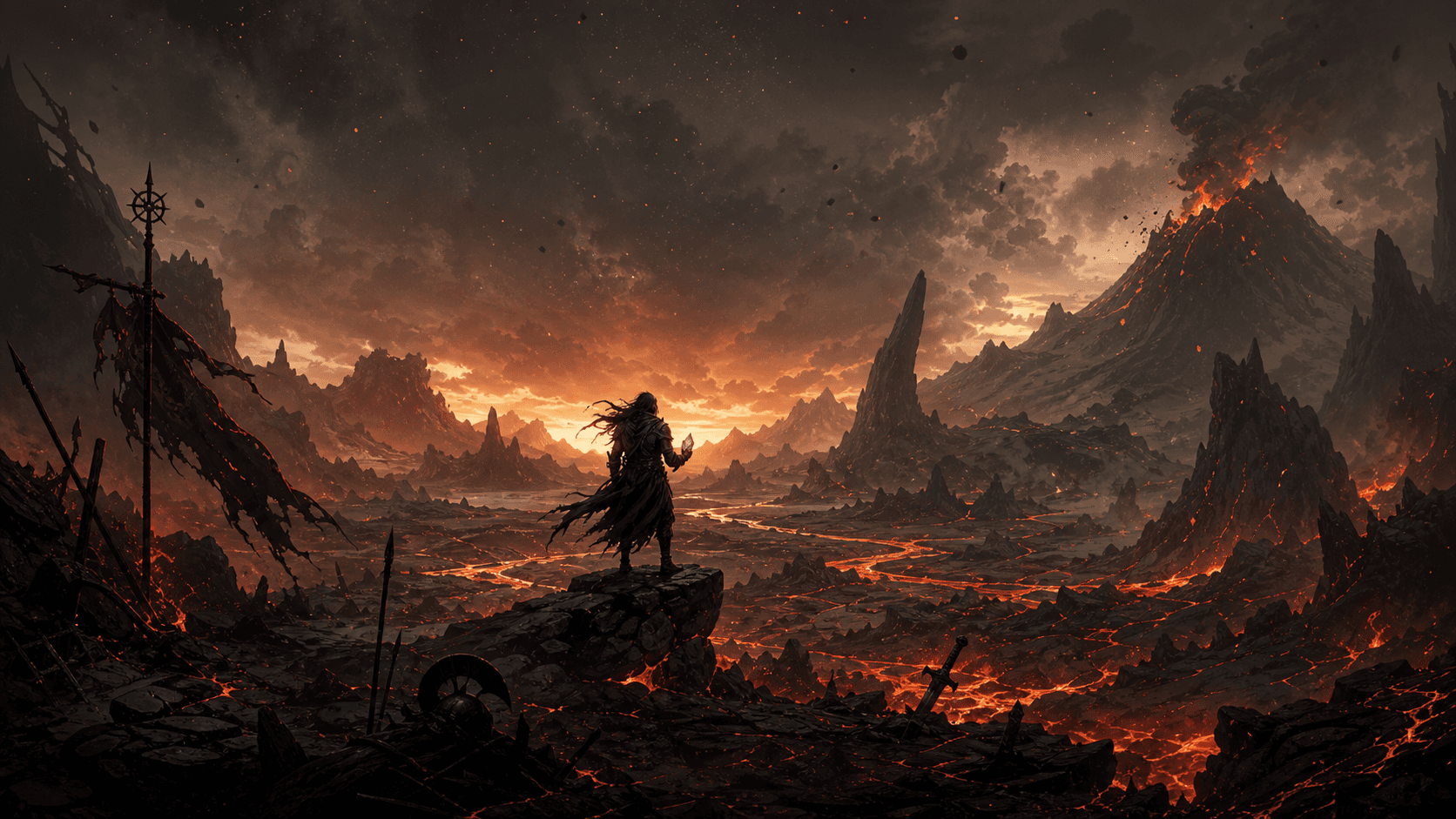
The morning had begun normally in Kharuun. The air dry, the sky pale, the stones warm as always. People were walking to the market square; children were fighting by the well; the old sat in the shade complaining about the impatience of the young.
Then a sound came from under the ground.
Draven took it for thunder at first. But the sound was not coming from above — it came from beneath his feet, like an animal growing inside the stones. Then the ground breathed in.
And opened.
The lava, against expectation, did not burst out at once. First came the light. Not red — something near white, a heat of the kind the eye refuses to look at. Then the air changed. People''s skin reacted before any flame touched them. The screaming began.
Draven did not run.
He knew he should run, but his body did not take the order. Everything was burning. The wooden beams of the houses, people''s clothes, the cloth awnings of the market, the manes of the animals. A woman tried to lift her child, and both of them sank together like shadows melting in the heat. A man ran for a water bucket; the bucket turned to steam in his hand.
Draven was burning.
He knew this because the edges of his clothes had caught, his skin had reddened, part of his hair had scorched. But there was no pain.
That frightened him more.
Pain is the body''s proof that it still belongs to you. Without pain, a person begins to feel that their body is making decisions on its own. That morning, for the first time, Draven did not trust his own body.
People died in front of him, and he remained standing.
For a while he believed it was a dream. Then a child''s voice proved too real to be dreamed. It was very short. The child called for its mother, and then the voice stopped.
In that moment, Draven saw something on the ground.
A piece of obsidian.
It lay between the cracks. The stones around it glowed red, the air scalded, the ground itself had gone liquid — but the obsidian was dark and calm. Draven bent down. He reached out. He took the stone into his palm.
It was cold.
That was impossible.
And impossible things, in the moment of catastrophe, are the things that feel most real. Draven gripped the stone. The cold spread through his palm. He did not take it as an omen. He did not take it as a keepsake. It had nothing to do with heroism, or fate, or lineage.
He simply needed something cold.
He put the stone in his pocket.
Then he saw his brother.
Only the two of them remained of the Oris family. They had lost their mother and father years before; that loss had bound them together and set them both apart from children their age. While others were learning the warmth of a family, they had learned each other''s silences. Draven was the elder. His brother had grown up in his shadow without ever becoming one.
His brother was not burning either.
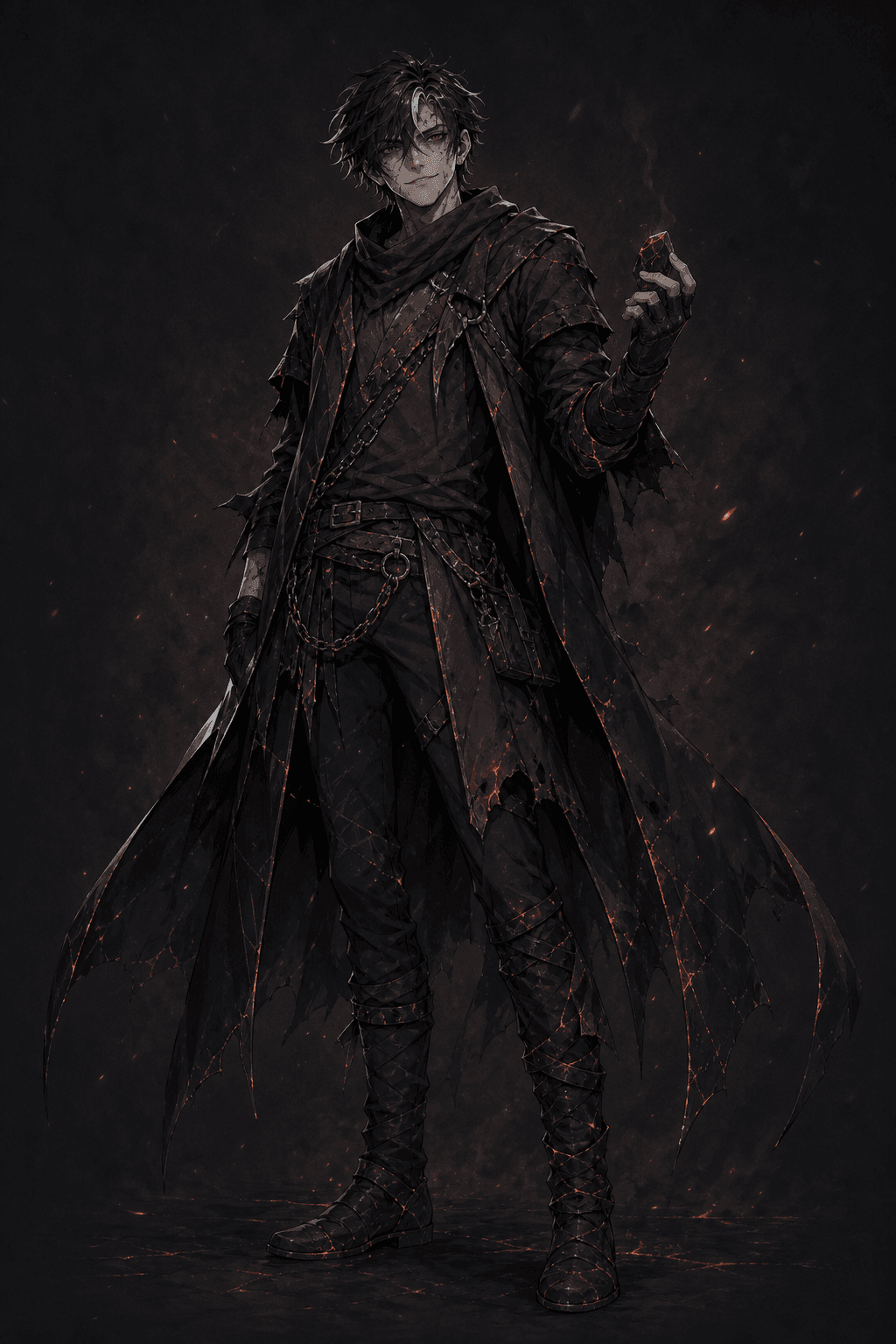
Or he was burning, and taking no harm. Part of the cloth on him had gone to ash. His face was black with soot. His eyes were very wide. But his body was whole.
Draven walked toward him.
Neither of them ran. This would become one of the things Draven thought about most, afterward. People were dying, the world was cracking, the sky was going dark with ash, magma was rising from under the earth like a city surfacing. And the two brothers walked toward each other.
As if there were nothing left to hurry for.
When Draven reached him, he did not know what to say. "Are you all right?" was absurd. "We have to run" sounded like something already too late. "What''s happening?" would have been childish.
His brother looked at Draven first.
Then he turned to the people dying in the flames and the collapse.
There was fear on his face — but under the fear there was something else. Curiosity? Fascination? Draven could not tell, in that moment. Perhaps he did not want to.
His brother spoke in a very calm voice:
"The apocalypse was not so bad after all."
The sentence opened a door inside Draven.
Because until that moment, the catastrophe had been something happening to them. After the sentence, the catastrophe became something that could be watched. Even appraised. Draven learned that day that even while a person is dying, someone can be looking at their death and forming an opinion about it.
And worse: he found the thing he had heard in his brother''s voice inside himself as well.
A measure of cold blood.
A measure of fascination.
A measure of relief.
The world was burning, and the two of them were not.
That knowledge gives a person guilt first. Then privilege. Draven walked the line between those two for the rest of his life.
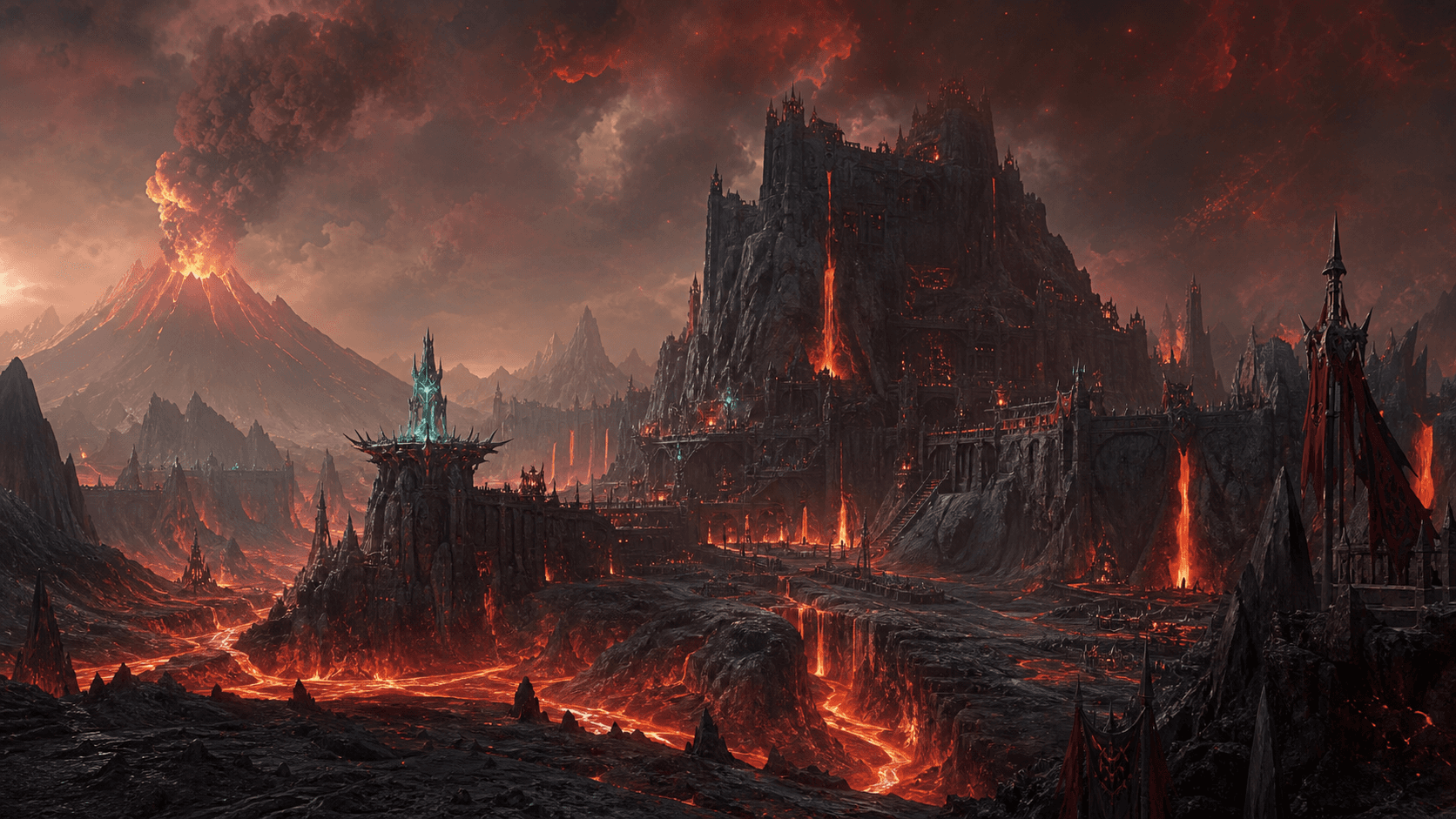
The Ember Rift did not end; it only lost its first rage. Lava flowed for days. Smoke rose for weeks. For months, people counted their losses. The survivors tried to understand why they had survived. Some took refuge in gods. Some in cards. Some in silence.
Draven chose trade.
At first glance it makes no sense. Why would someone who walked out of a catastrophe turn to commerce? Because trade is the most honest language of pain. Everyone has lost something. Everyone wants something. Everyone wonders what their loss can be exchanged for.
Draven noticed this before other people did.
He kept the obsidian stone. In time he understood it was no ordinary rock. It was left over from the first moment of the Ember Rift; its cold was like a seal that denied fire. When he held it, his mind went clear. The fact that he had felt no pain in the flames, joined with the stone''s cold, gave birth to a new idea in him:
Power is not only a thing you possess.
Power is seeing another person''s hunger for it — and being able to set the price.
His brother wanted a more direct road. He took the endurance the fire had left, the immunity, the intoxication of having outlived a catastrophe, and called it destiny. Draven disliked the word. Destiny leaves a person in debt. Draven did not intend to owe anyone anything.
In the years that followed, he learned both markets. Magma power was open — hot, bright, and respectable; its craft could be traded in daylight for honest Oren. Void work was the opposite: hidden, expensive, touching the things people conceal even from themselves. The law had put a wall between the two, and Draven loved walls, because he knew there is a market on both sides of every one of them.
Draven wanted both.
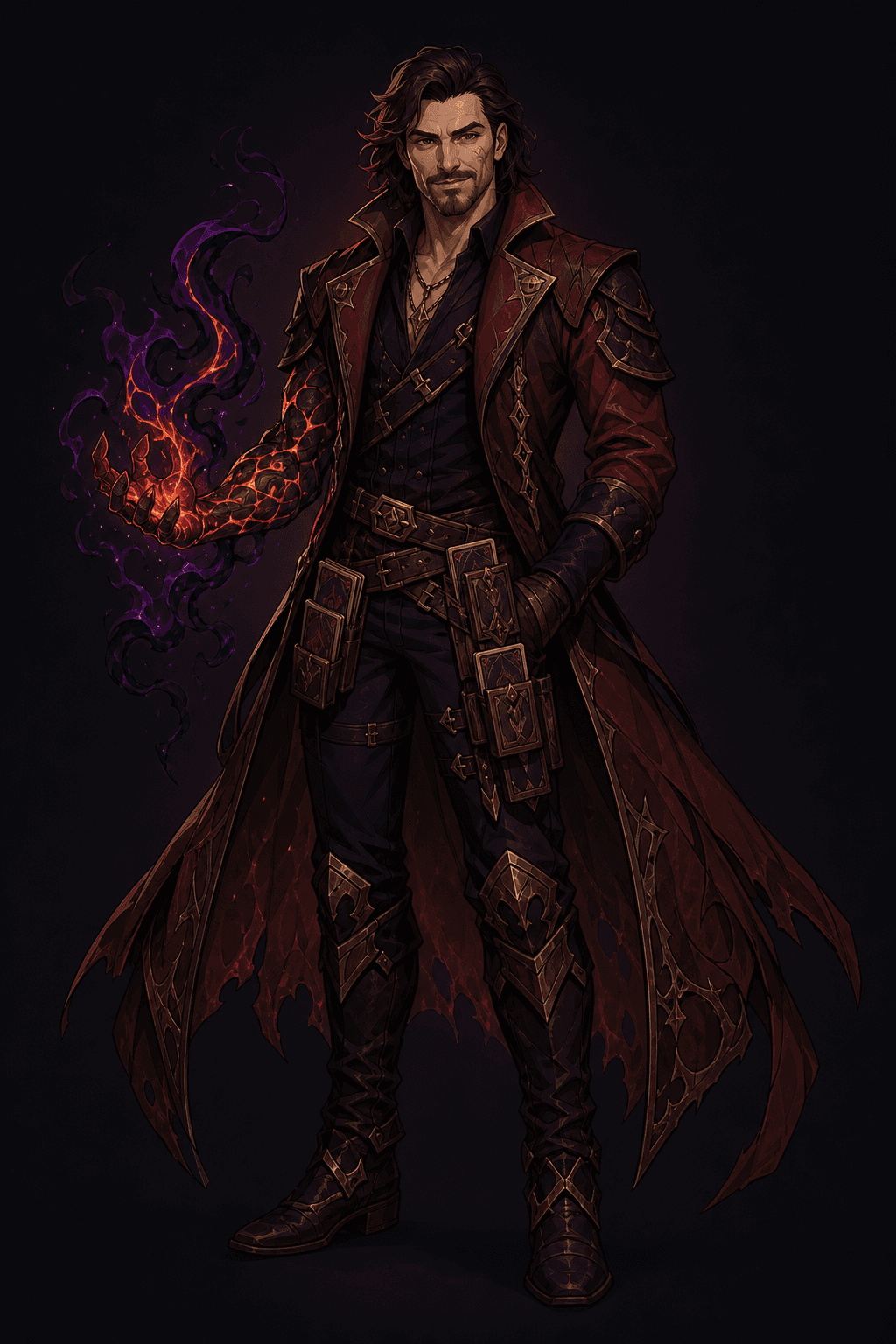
It made him rich, and feared, and impossible to place — the honest trader with one hand in the light and the priced secret in the other. People who learned what he sold were afraid.
Draven smiled.
His smile was a good one.
That is what made it dangerous.
Because Draven Oris never behaved like a man who wanted to destroy the world. He was the man who sat down at the table and made an offer. His voice was soft. He understood quickly what the person across from him needed. A card, a seal, a forbidden piece of knowledge, the trail of a lost relative, a way to dull pain, a price for more power...
Everything had a price.
The boy left over from the Ember Rift had heard that price spoken aloud for the first time in his brother''s sentence:
"The apocalypse was not so bad after all."
Draven never repeated it.
But he built his entire life on it.
Because some people survive a catastrophe and try to repair the world.
Some survive and never trust the world again.
And Draven Oris survived, looked around, and noticed the most terrifying thing of all:
Even the apocalypse can be sold — to the right buyer.
Related records
Signals from this file

Inline portals